Discipline — Artificial Intelligence
Discipline — Artificial Intelligence
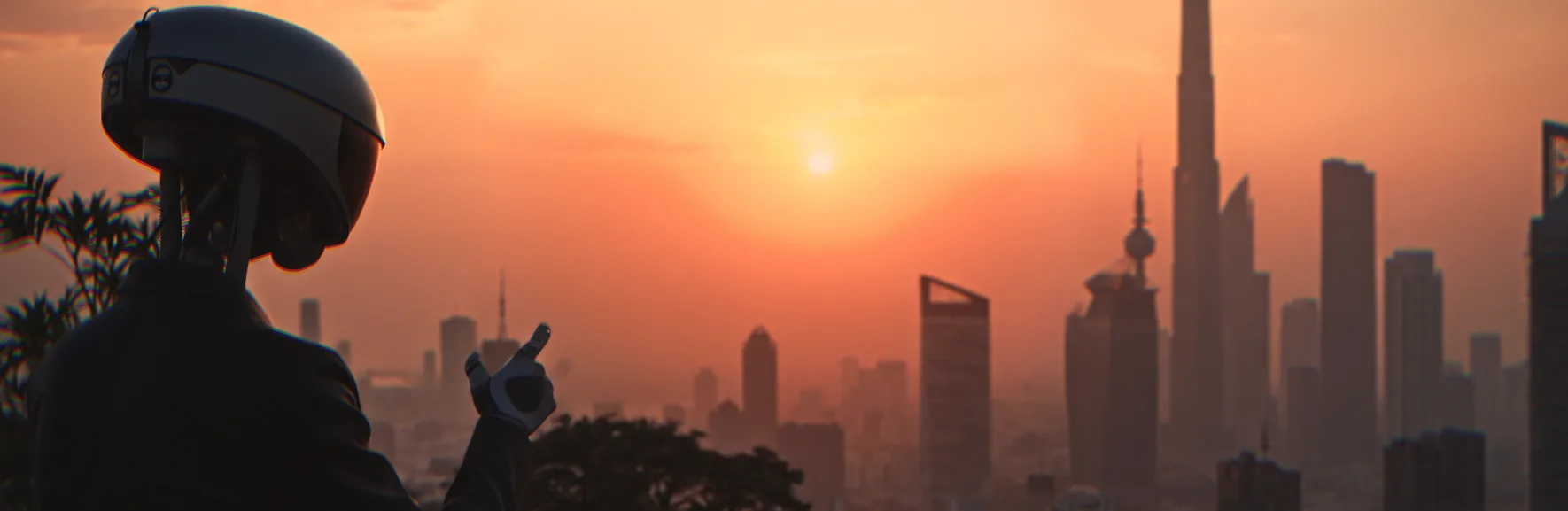
This is an ongoing body of work at the intersection of generative AI and traditional VFX craft — original shots built with prompt-driven models, controlled through ComfyUI node workflows, and finished with the same matchmove, comp, and color discipline as any production pipeline.
It is also a teaching practice. I created CTAN 498: A.I. for Animation Production and VFX — the first AI class in animation at the USC School of Cinematic Arts — built on creative authorship, integrity, and ethical decision-making alongside technical fluency.
The practice includes
A running cut of the AI body of work — every shot generated, art-directed, and finished rather than accepted as it fell out of the model.
To get high-quality results you have to be a creative writer with an understanding of how the model understands language — subject, mood, lighting, lensing, and style, specified the way a cinematographer would call them.
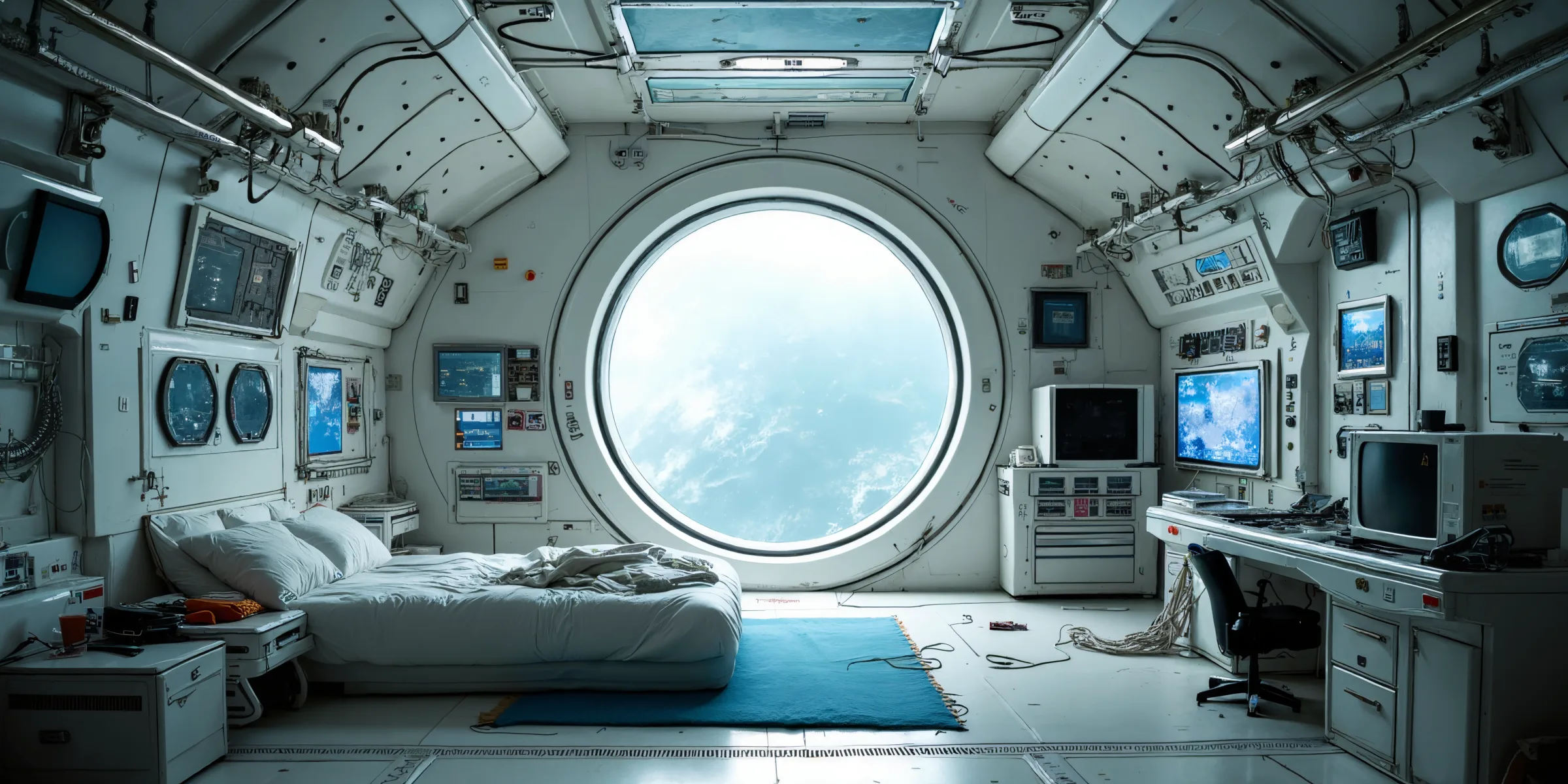
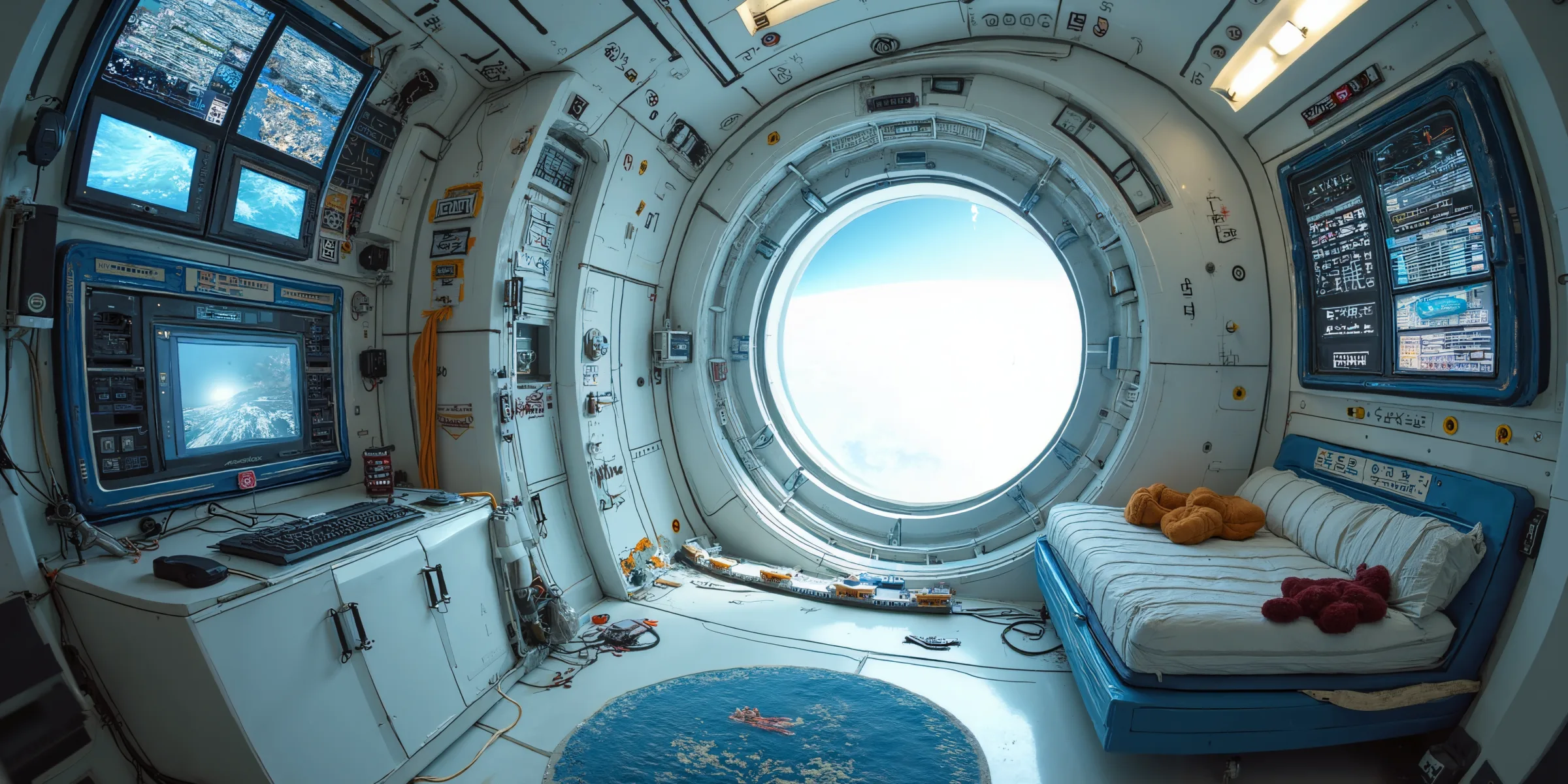
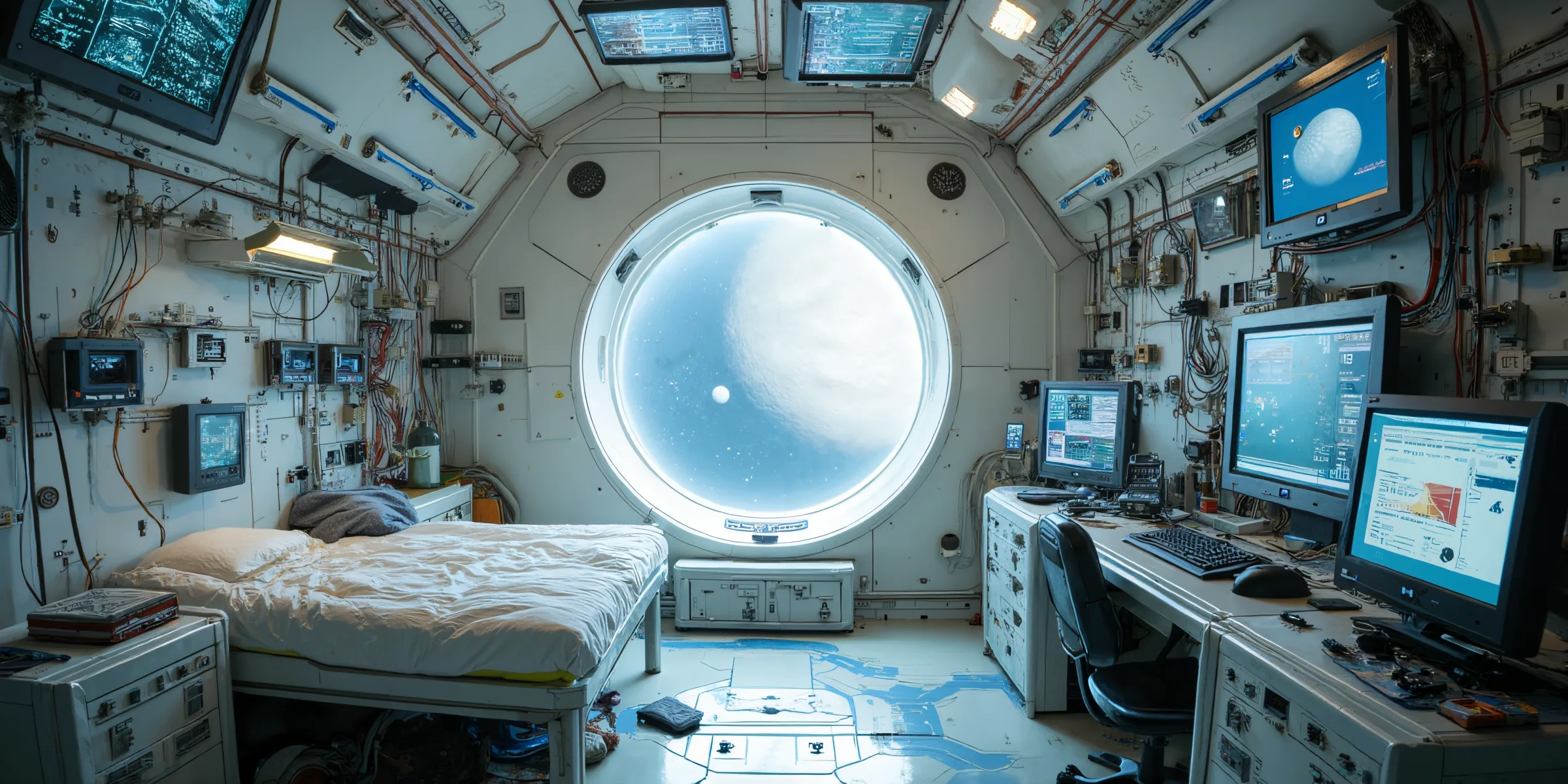
The frames below came from a single written prompt: a lived-in research station interior, shot on a 12 mm fisheye at f/4.5, Ganymede and Jupiter out the window, film grain and all.
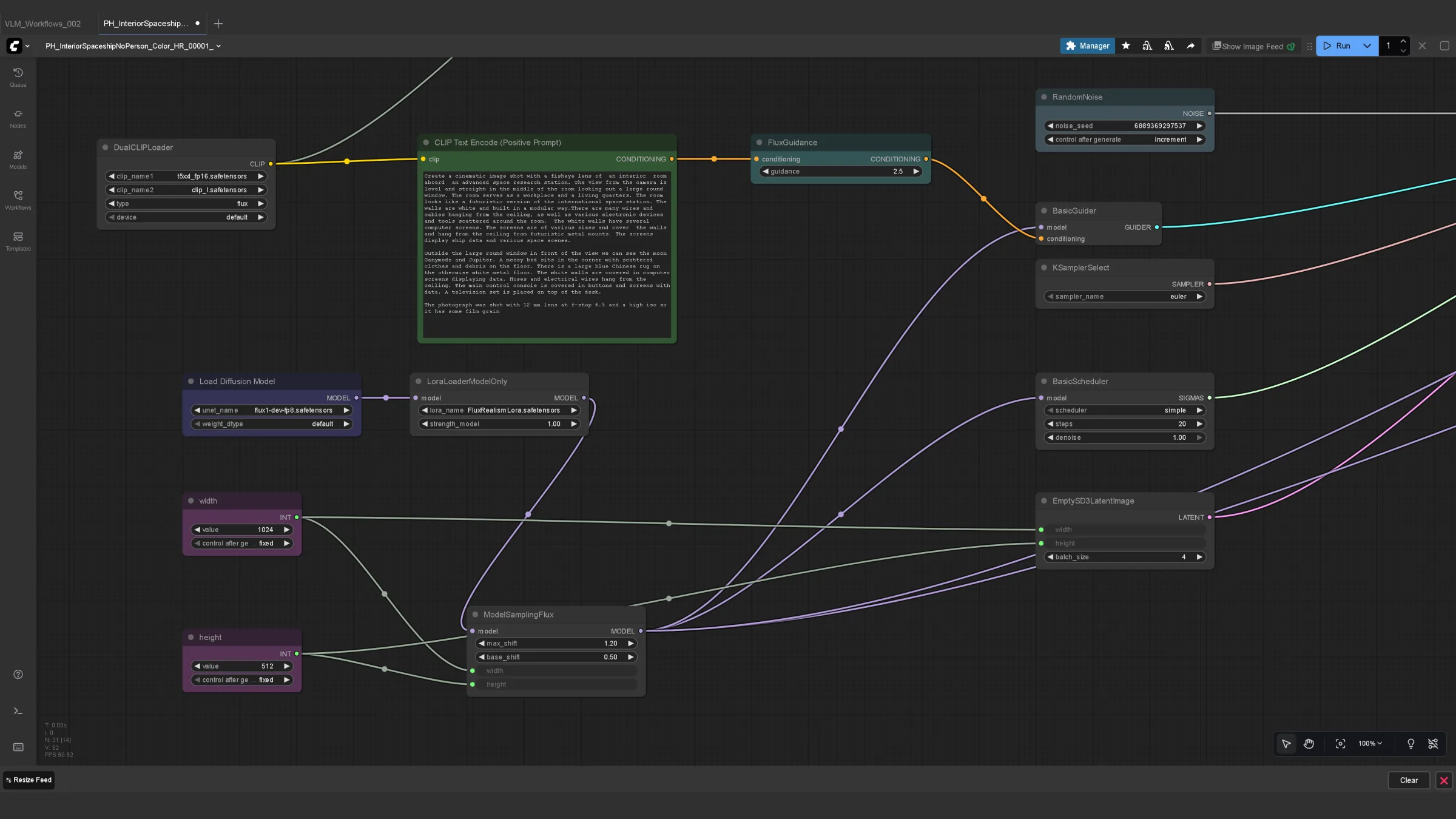
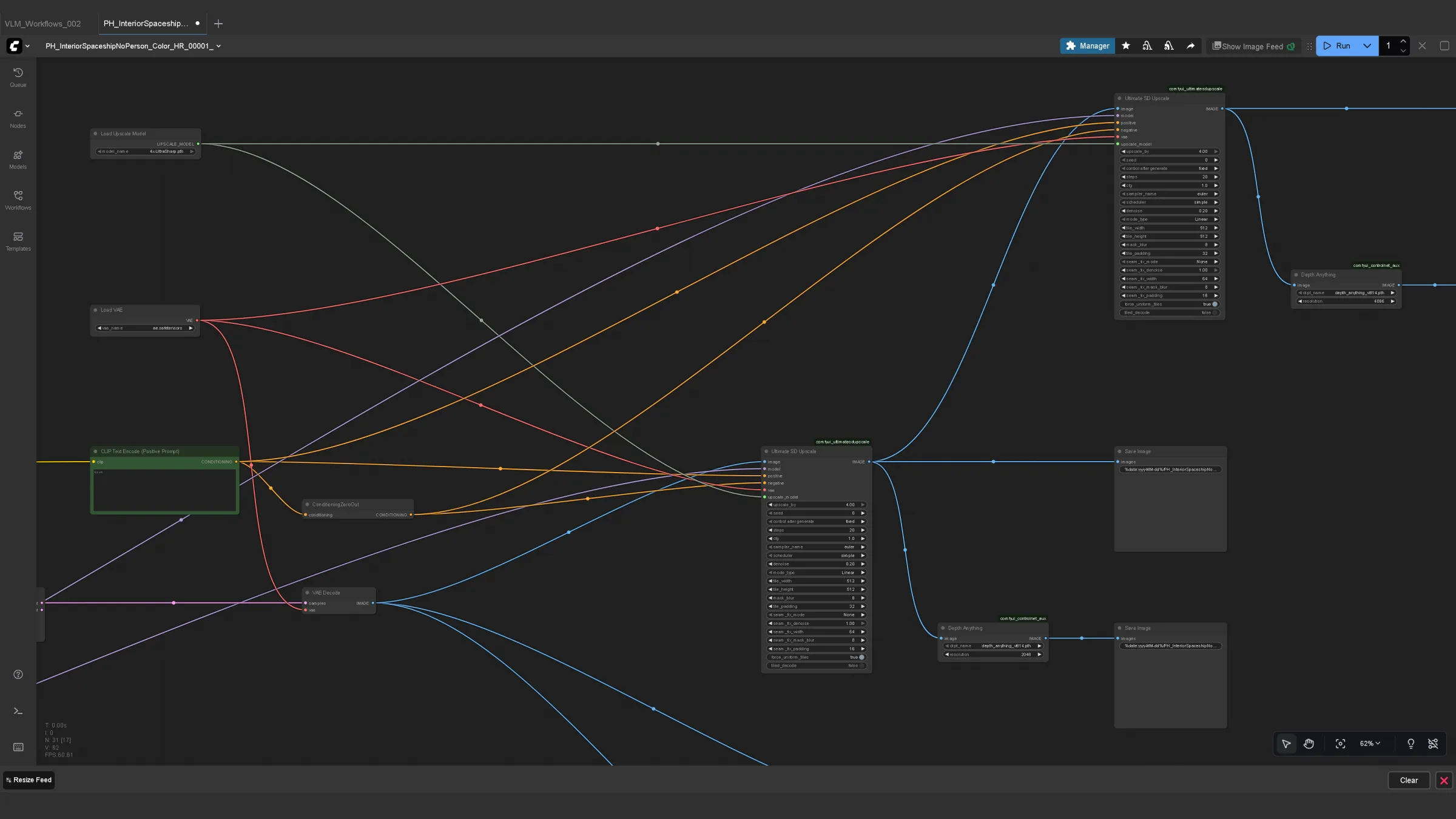
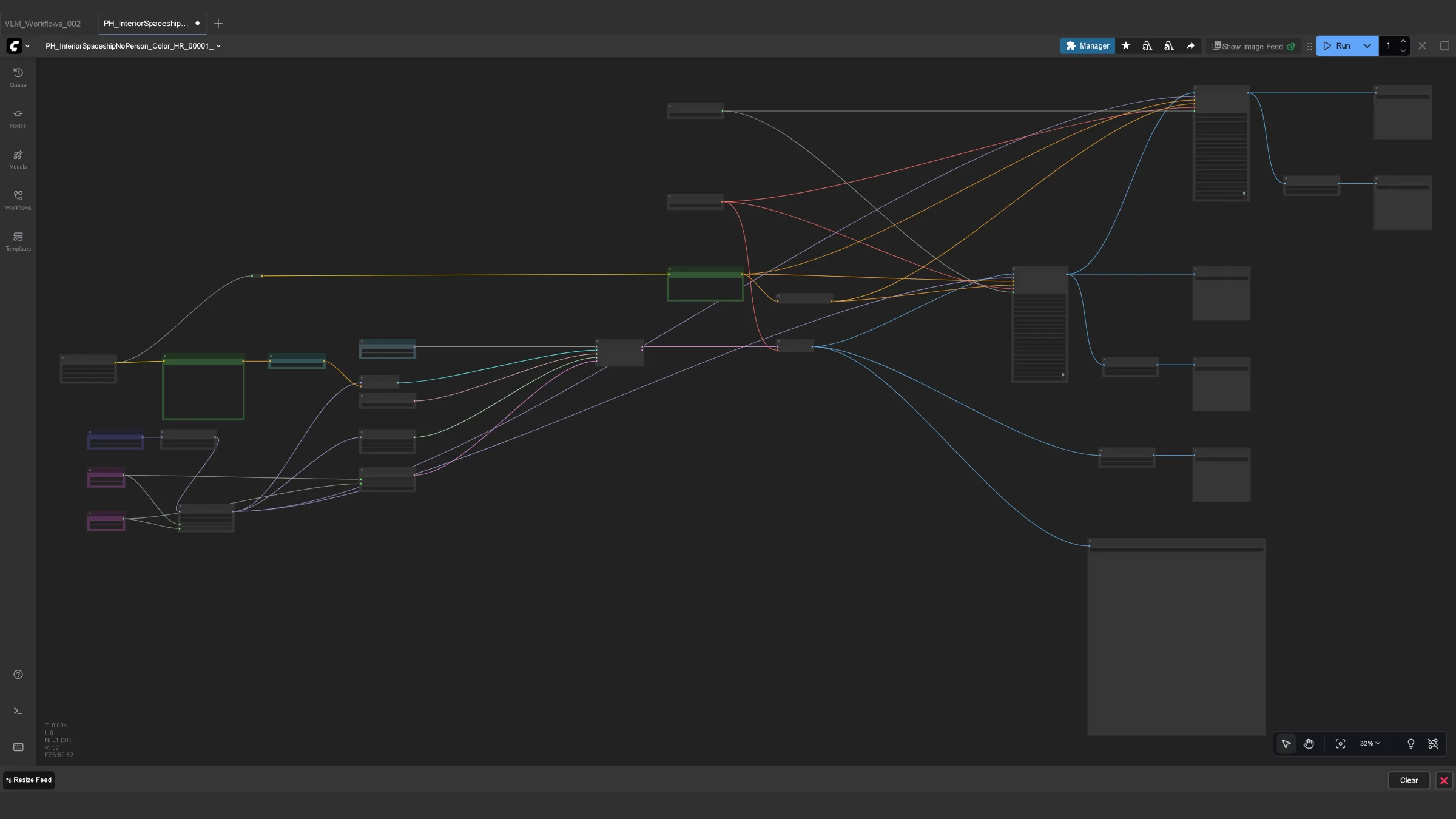


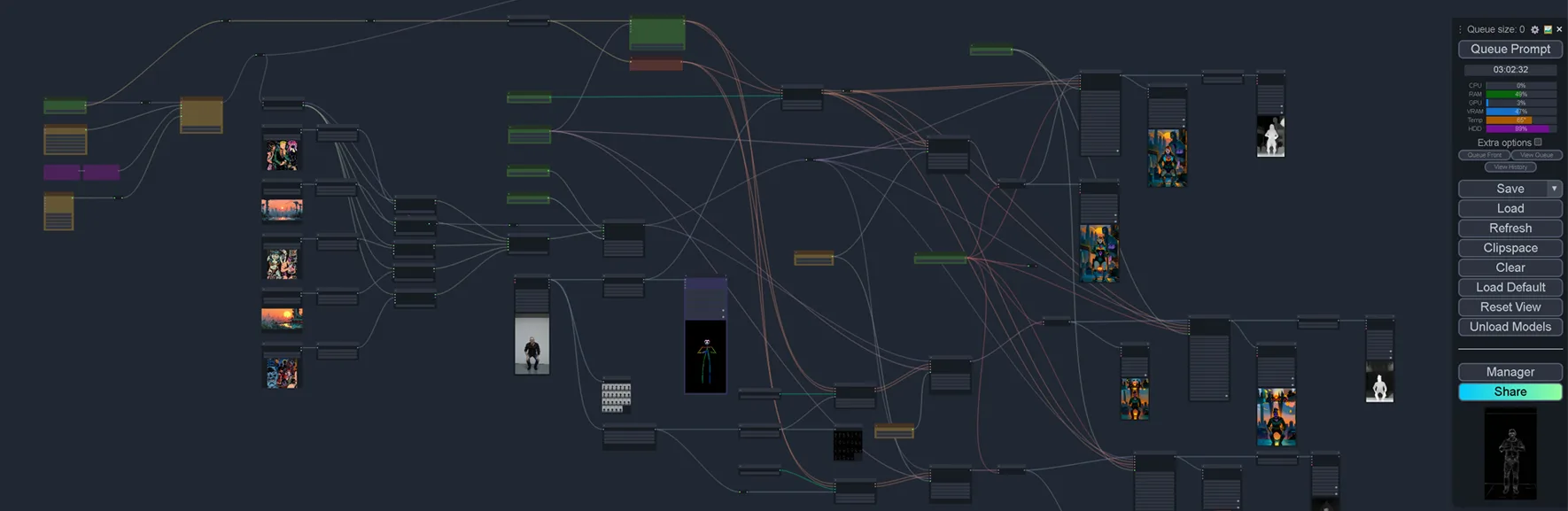
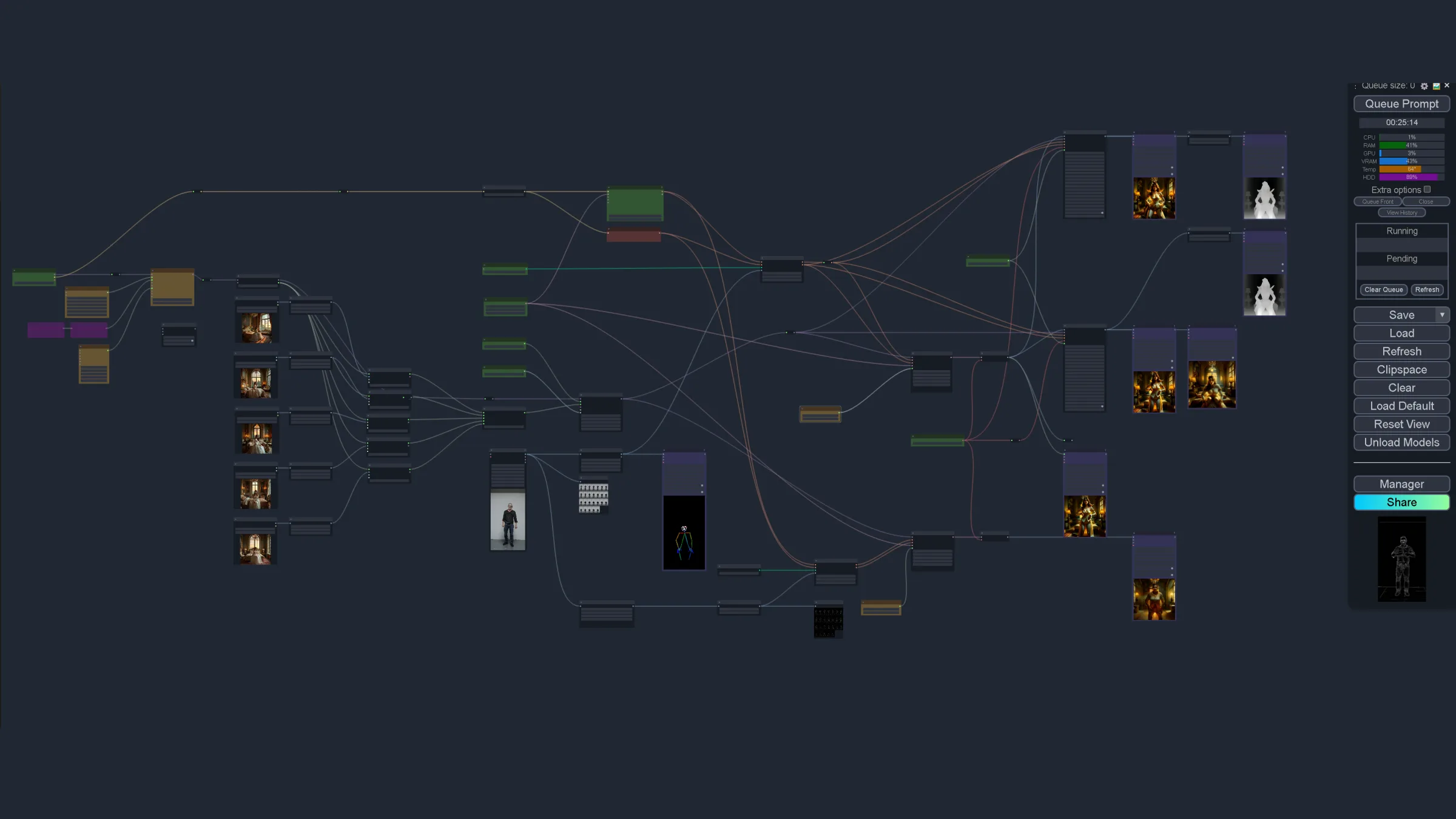
ComfyUI is where generation becomes a pipeline instead of a slot machine — open-source, node-based control over models (Flux, Wan 2.2, Qwen), VAEs, LoRAs, ControlNets, and upscaling.
For anyone coming from Houdini, Nuke, or TouchDesigner, this is familiar territory: a node graph is a pipeline you own. Depth maps, pose rigs, and sketches drive the structure while the model fills in the world.
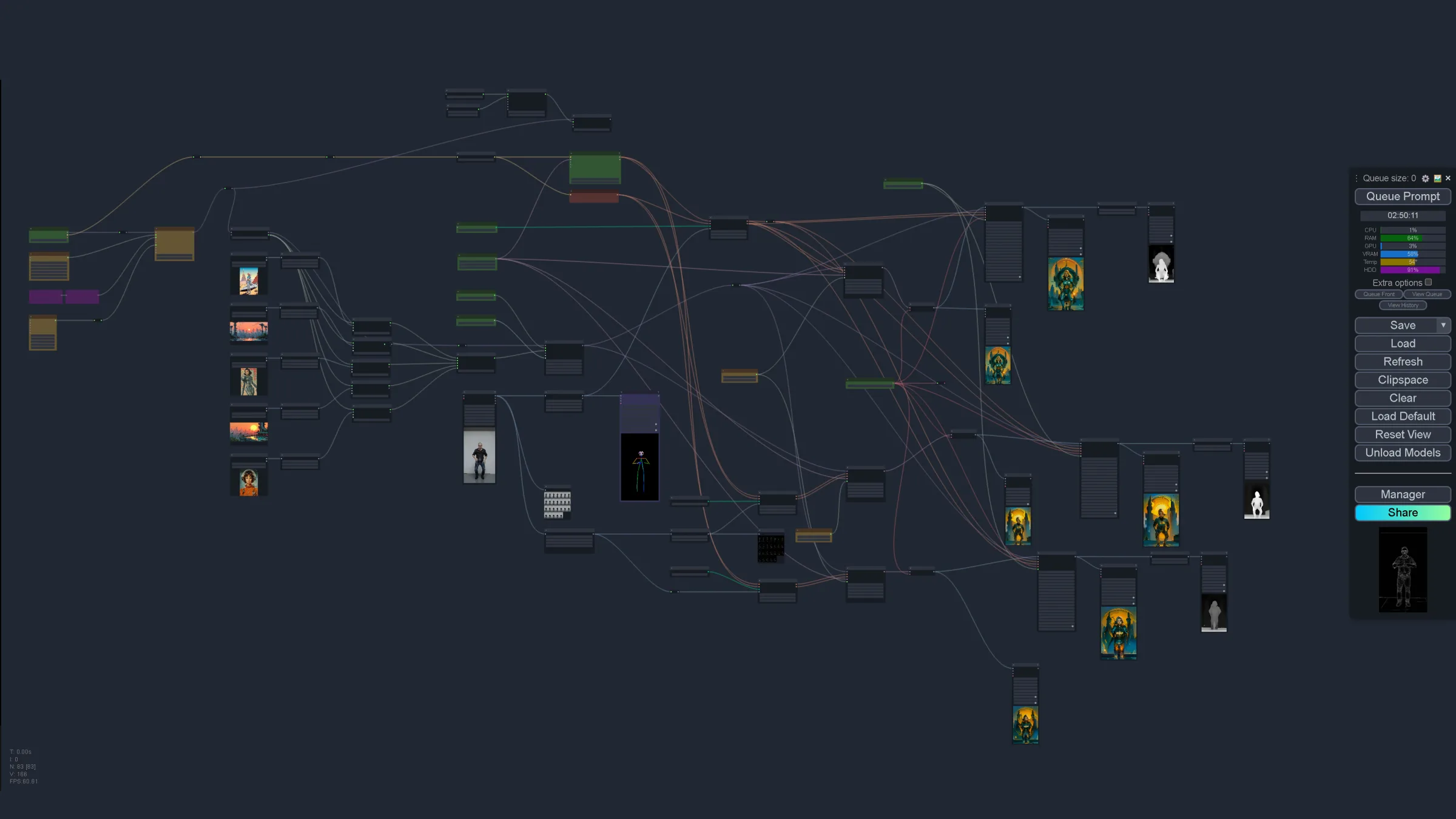
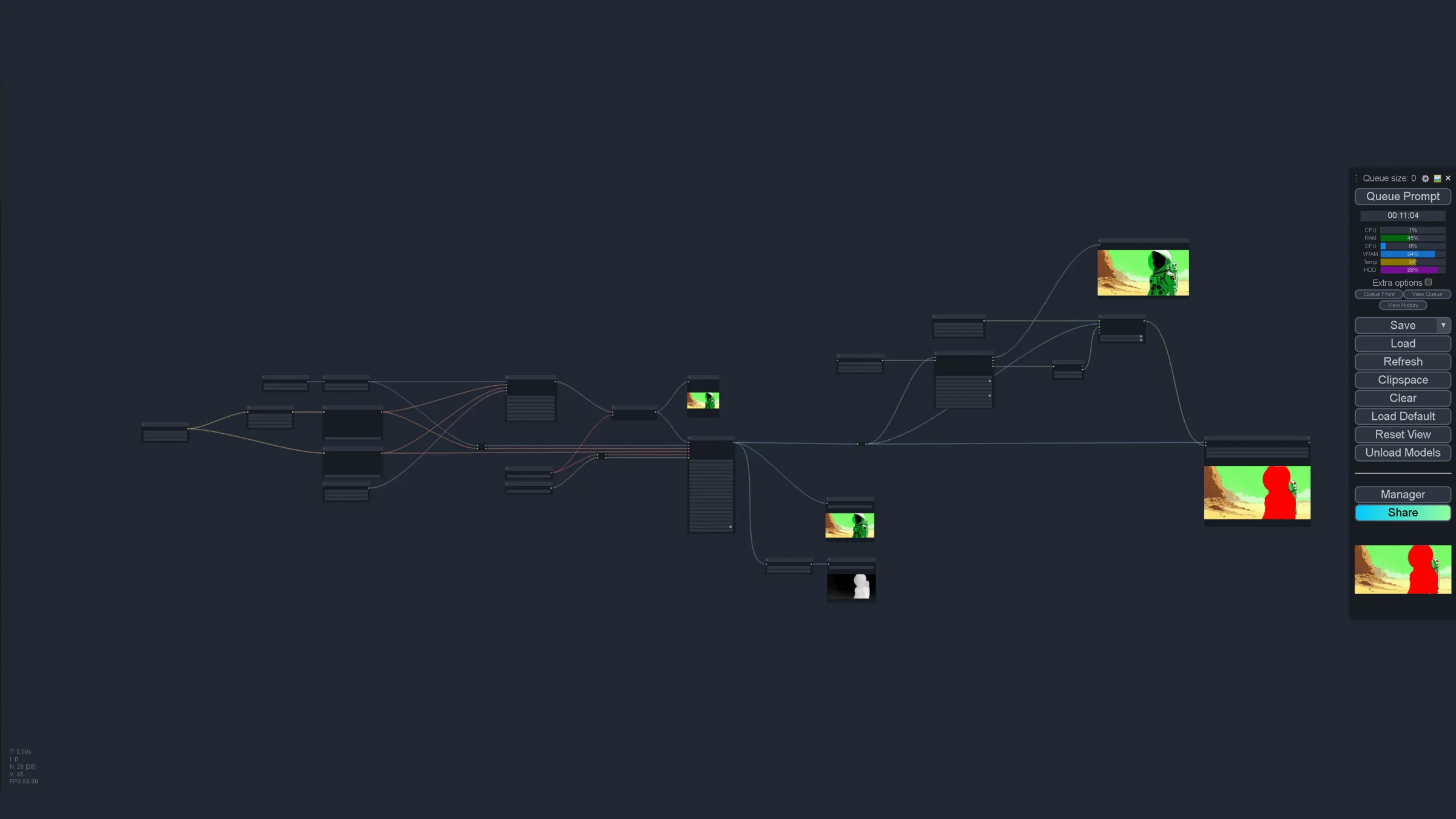
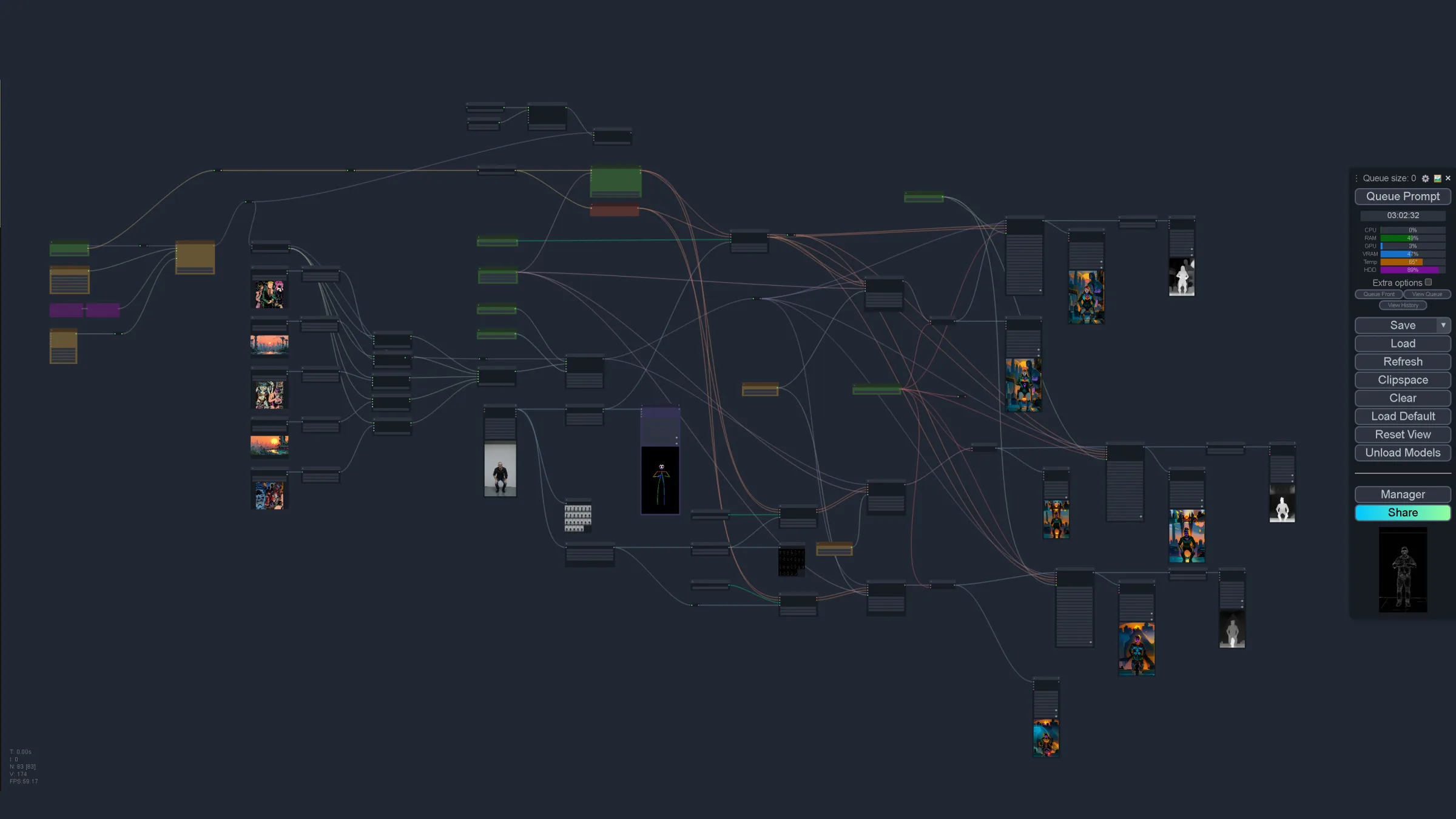
A LoRA is a lightweight tuning layer that teaches a model one new thing — a character, a style, a world — without retraining the model itself. Training on our own creations is how a consistent character survives from shot to shot.
Character sheets and pose setups anchor identity; the model handles the in-betweens.
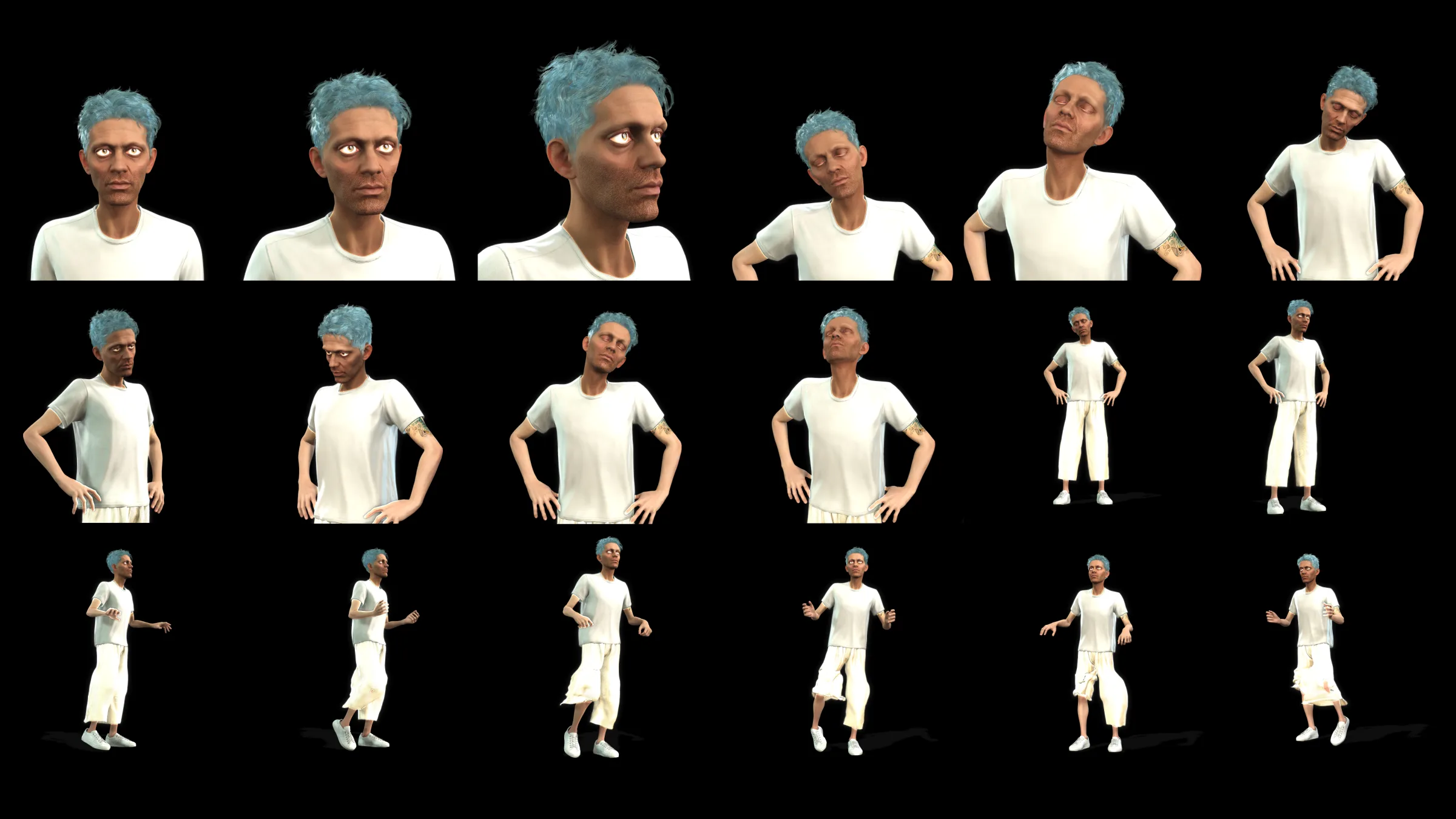
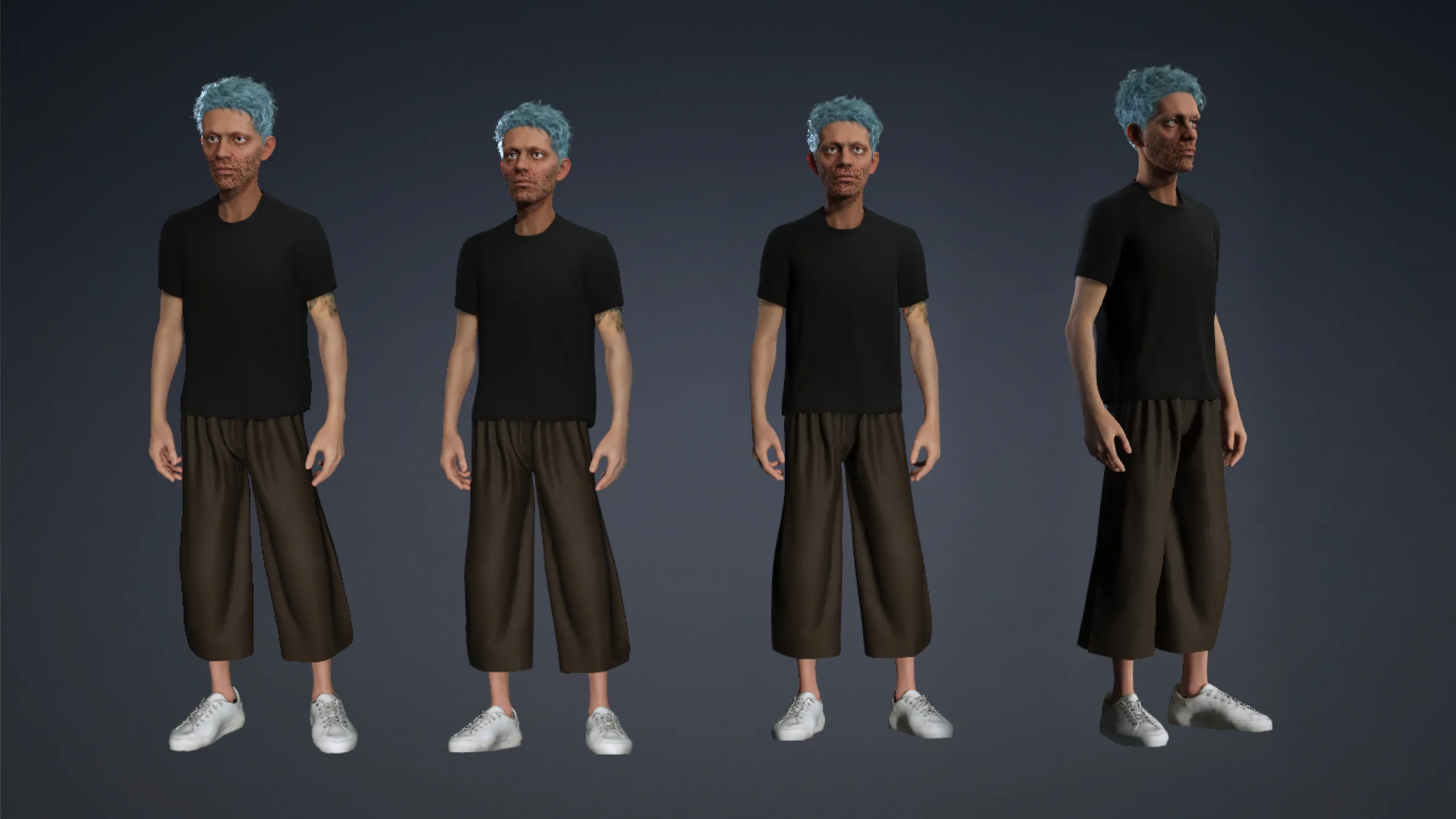
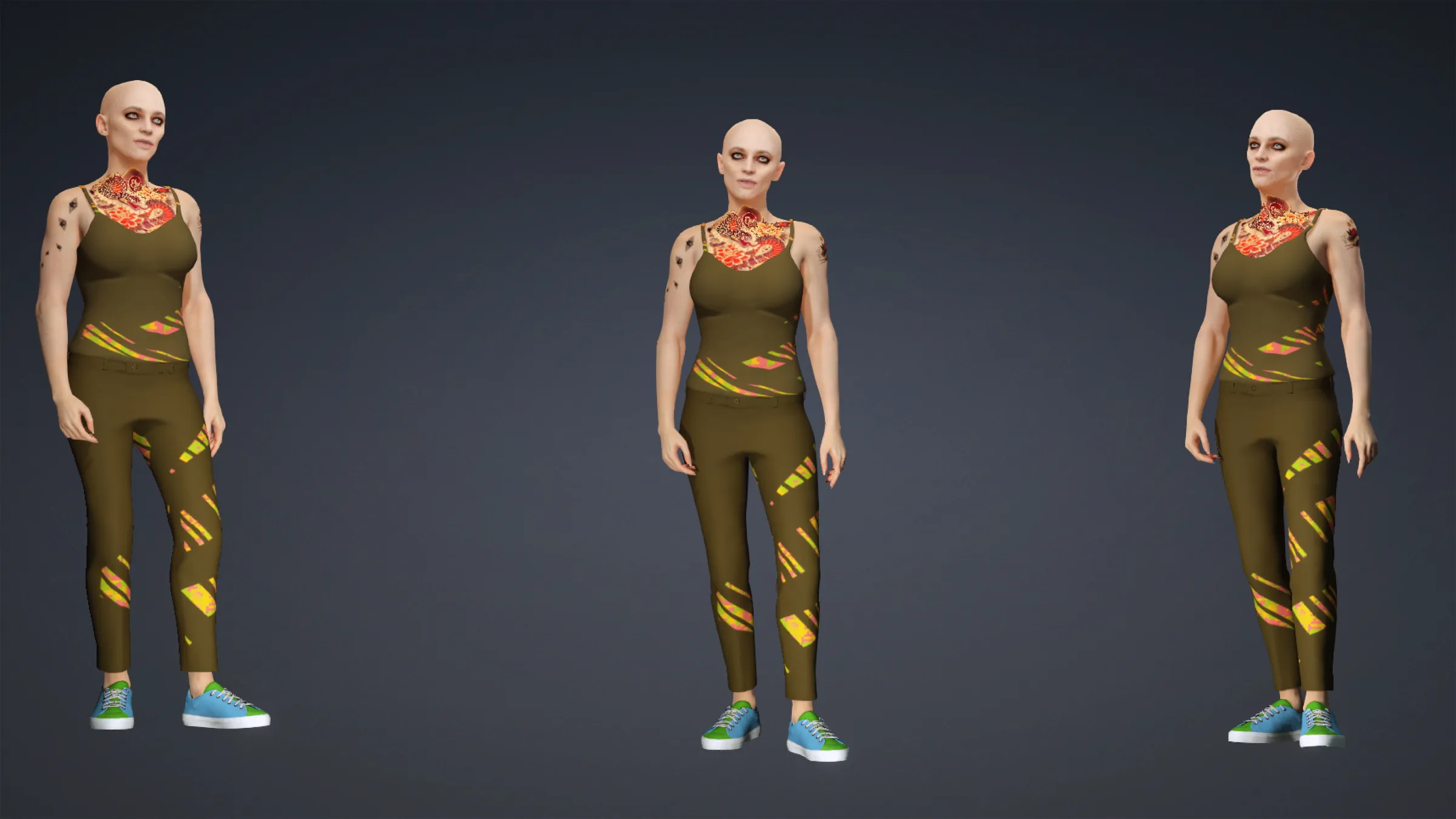
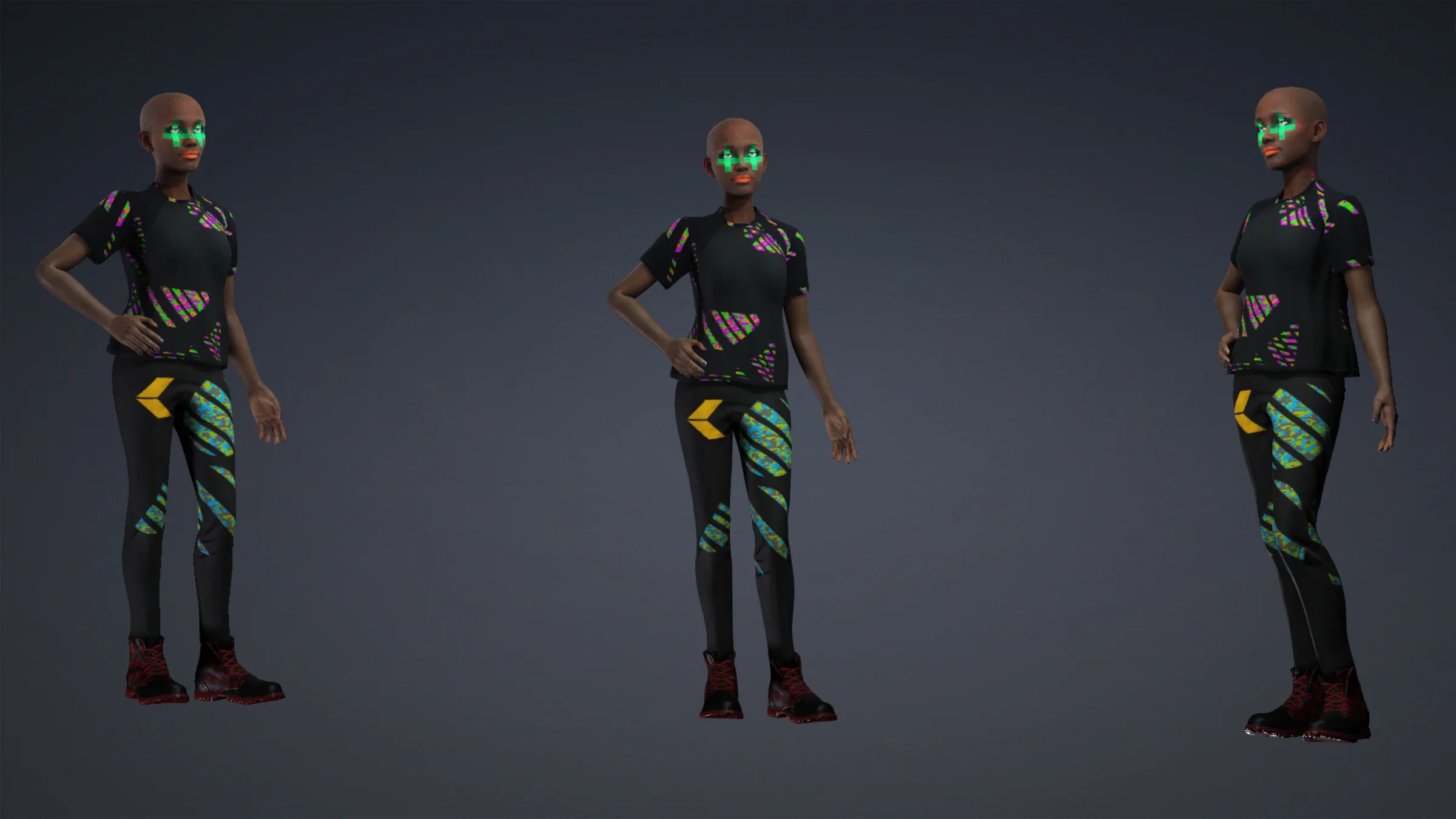
"We will always need creators."
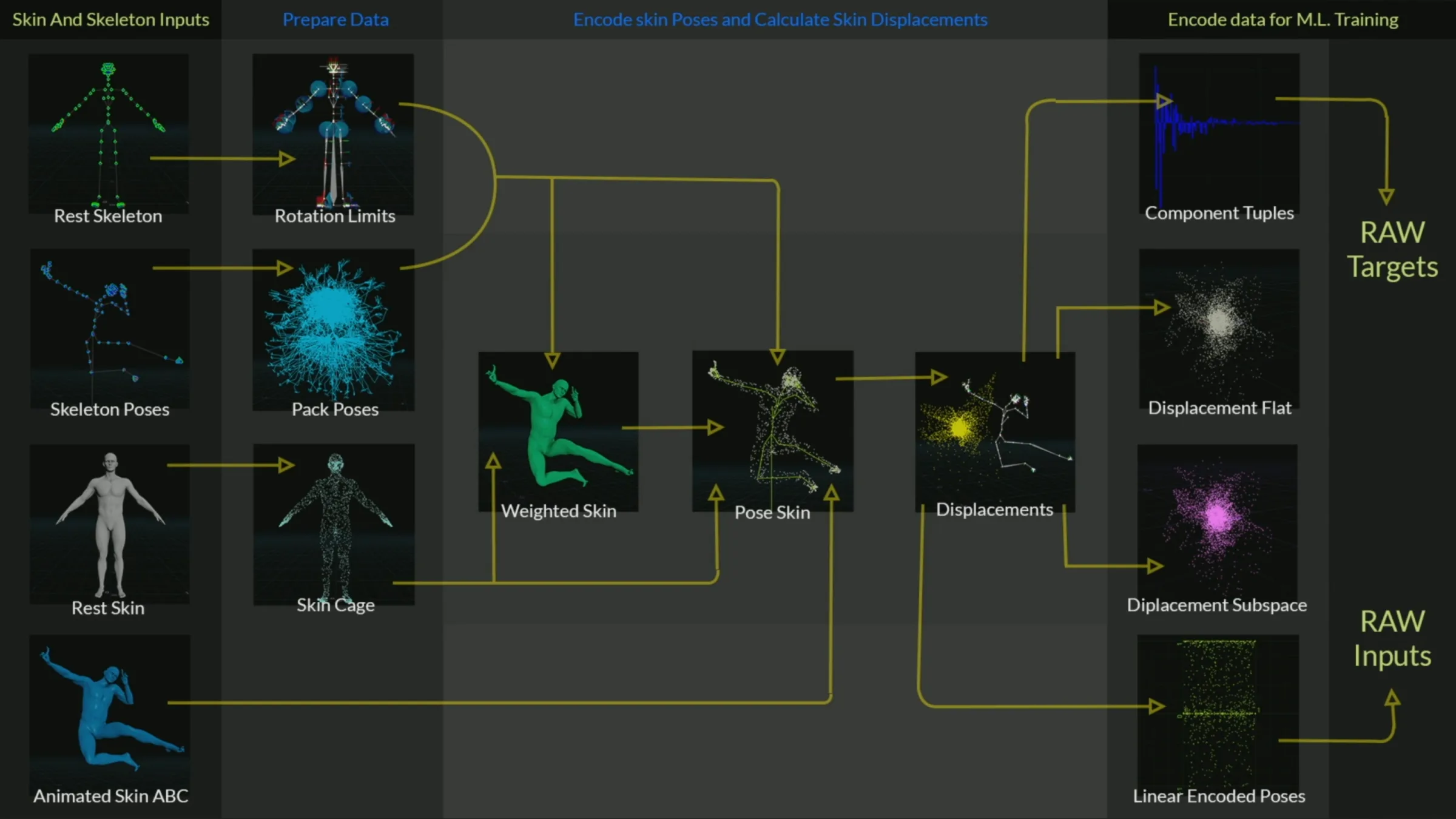
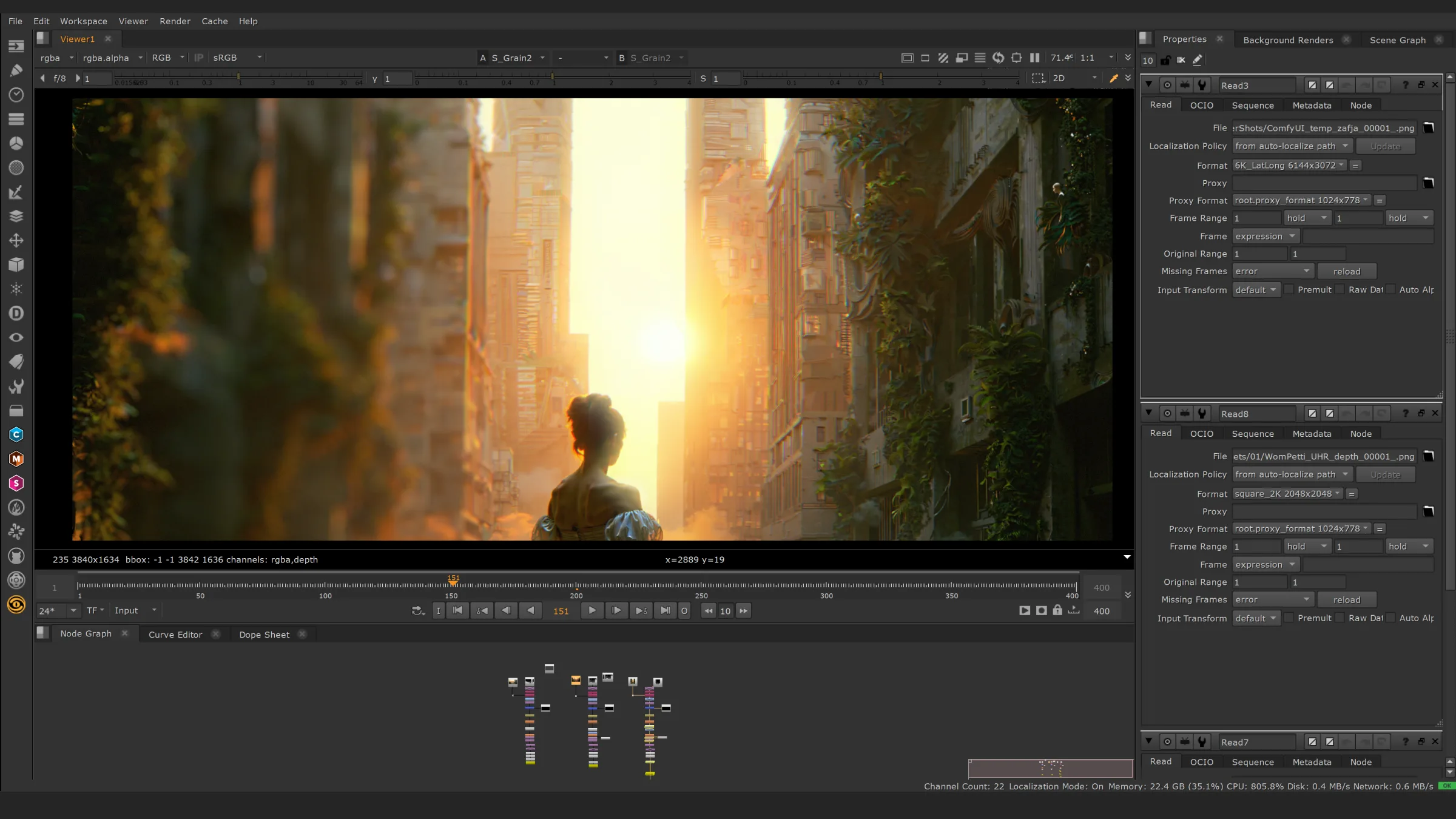
Generated output is treated as a plate, not a final — matchmoved, composited, upres'd, and color-expanded in Nuke, exactly as live-action plates would be.
With limited native resolution and no HDR colorspace, the finishing pipeline is where AI footage becomes production footage.
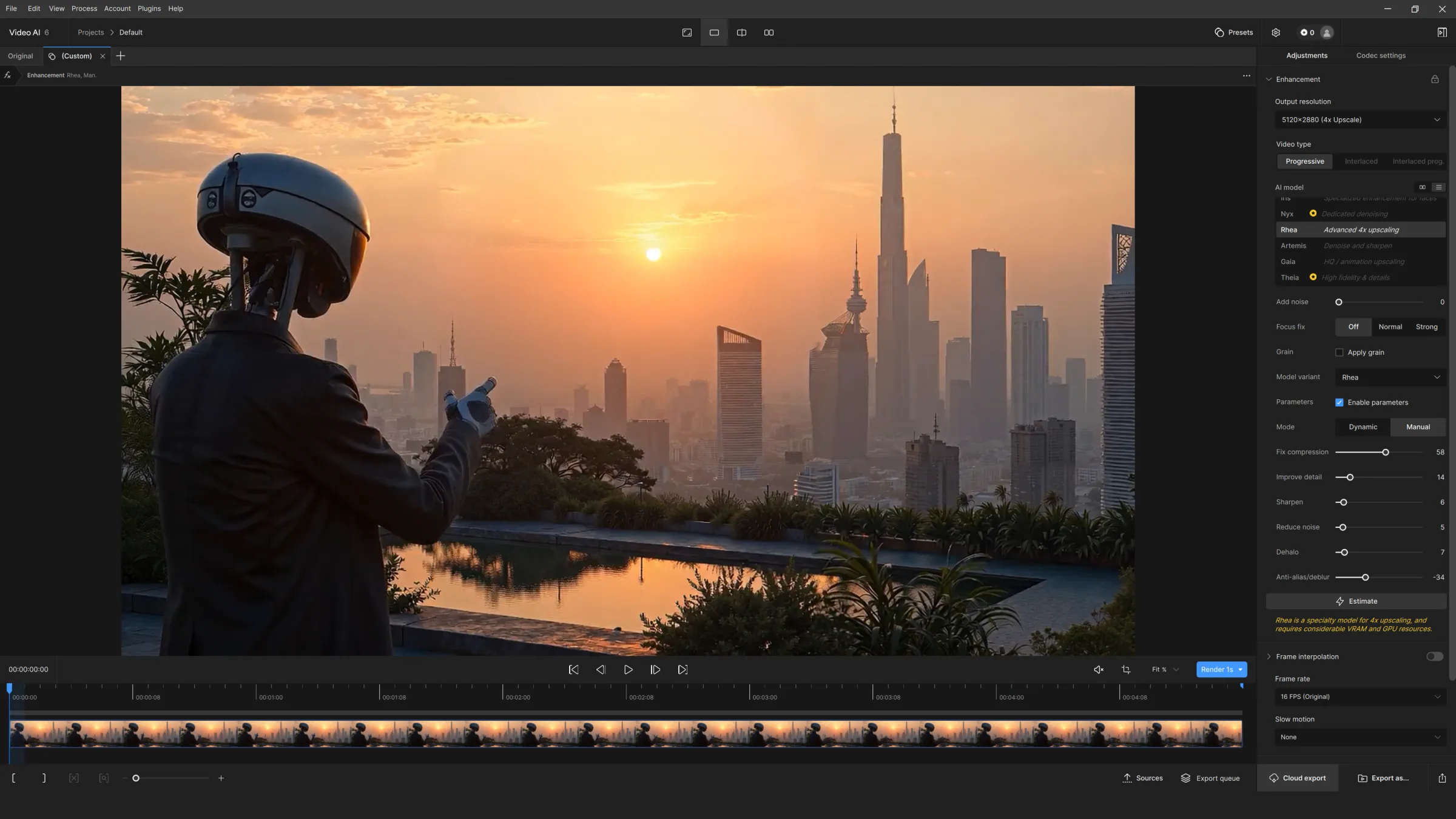
CTAN 498: A.I. for Animation Production and VFX is the first AI class in animation at the USC School of Cinematic Arts. Over a semester, students take an original idea from loglines through prompting, ComfyUI, LoRA training, and ML-assisted post to a finished one-to-two-minute piece — with ethics and authorship built into every step, not bolted on at the end.
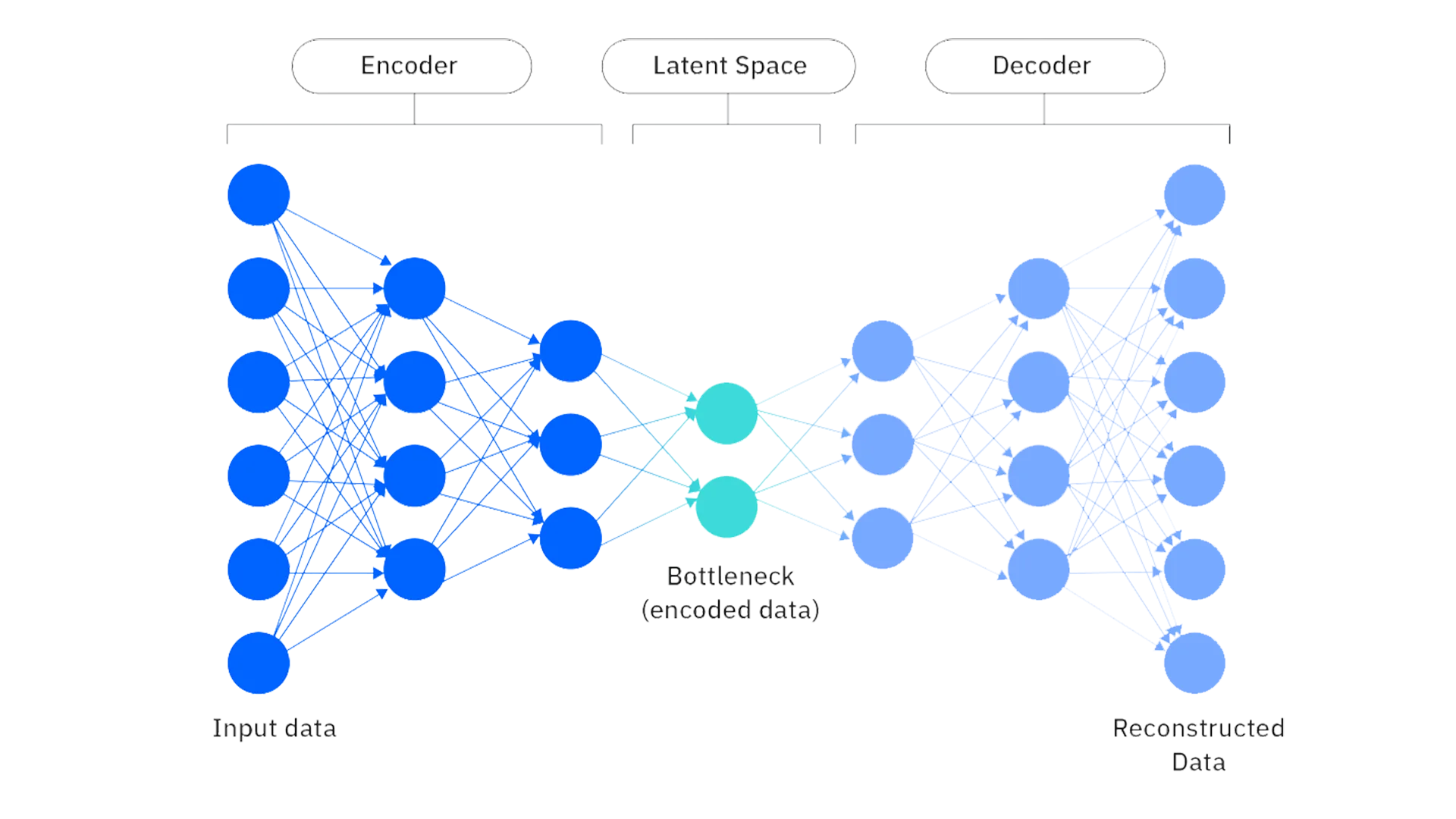
The companion lecture, "The Robots are Here," is a broad survey of the AI tools being used professionally across animation and VFX — from latent space to ControlNets — delivered to industry audiences including Dolby.